


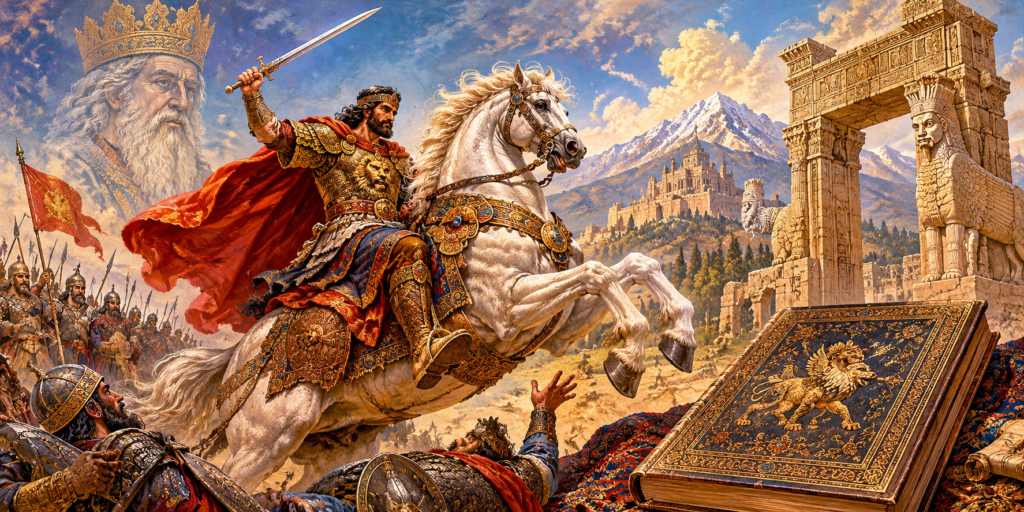
The Shahnameh: History, Heroes, and the Enduring Significance of Persia’s Book of Kings
The Shahnameh, also known as the Book of Kings, is one of the greatest literary masterpieces of Persian culture. Written by the celebrated Persian poet Ferdowsi, this epic poem preserves centuries of Iranian legends, heroic adventures, royal histories, and cultural traditions. More than a collection of ancient stories, the Shahnameh is a remarkable reflection of Persian identity, values, and imagination.
What Is the Shahnameh?
The Shahnameh is an extensive epic poem composed in Persian by Ferdowsi, who completed the work around 1010 CE. Traditionally estimated at approximately 50,000 couplets, it is among the longest epic poems ever written by a single poet.
The work recounts the legendary history of ancient Persia, beginning with the creation of the world and the earliest mythical kings and continuing through heroic dynasties to the Arab conquest of the Sasanian Empire in the seventh century. Its stories combine mythology, history, moral lessons, and unforgettable characters.
Ferdowsi: The Poet Who Preserved Persian Heritage
Abu’l-Qasem Ferdowsi was born in Tus, in the historical region of Khorasan, during the tenth century. He devoted much of his life to composing the Shahnameh, drawing on earlier Persian historical and legendary traditions, including materials associated with the ancient Book of Kings.
Ferdowsi’s achievement was especially significant because he wrote in New Persian at a time when Arabic had considerable influence in scholarly and literary life. His work helped preserve Persian vocabulary, storytelling traditions, and cultural memory for future generations. Today, Ferdowsi is celebrated as one of the most influential figures in Persian literature.
The Three Main Eras of the Shahnameh
The narrative of the Shahnameh is commonly divided into three major periods, each presenting a different dimension of Iran’s legendary past.
1. The Mythical Age
The first section introduces the origins of civilization and the earliest legendary kings. It includes stories of figures such as Keyumars, Hushang, Tahmuras, and Jamshid. These rulers represent the development of human society, the discovery of important skills, and the struggle between order and chaos.
One of the most memorable villains of this era is Zahhak, a tyrannical king whose reign symbolizes oppression and injustice. His eventual downfall introduces the enduring theme of resistance against tyranny.
2. The Heroic Age
The heroic age is the most celebrated part of the Shahnameh. It features legendary warriors, dramatic battles, family tragedies, loyalty, courage, and difficult moral choices. Many of its most famous stories revolve around the hero Rostam and his extraordinary adventures.
Rostam, the powerful champion of Iran, is admired for his strength, bravery, and dedication. However, his stories also reveal human weaknesses and the tragic consequences of pride, misunderstanding, and fate.
3. The Historical Age
The final section moves closer to recorded history, describing the reigns of Iranian dynasties and the political struggles of their rulers. It includes accounts associated with the Achaemenid, Parthian, and Sasanian periods, although the poem’s historical narratives also contain legendary elements.
The story concludes with the fall of the Sasanian Empire, marking the end of an era in the traditional royal history presented by Ferdowsi.
Famous Heroes and Characters of the Shahnameh
The enduring popularity of the Shahnameh comes largely from its memorable characters and emotionally powerful stories.
Rostam: The Legendary Persian Hero
Rostam is perhaps the most recognizable hero in the Shahnameh. Known for his immense strength, extraordinary courage, and loyal horse Rakhsh, he defends Iran against numerous enemies and supernatural threats. His adventures explore the responsibilities of heroism and the cost of loyalty.
Sohrab: A Tragic Story of Father and Son
One of the most heartbreaking episodes tells the story of Rostam and his son Sohrab. Unaware of each other’s identities, they meet as opponents on the battlefield. Their tragic confrontation becomes a powerful reflection on fate, recognition, and the devastating consequences of war.
Siyavash: A Symbol of Innocence and Integrity
Siyavash is remembered for his honesty, purity, and commitment to justice. His story, involving false accusations, exile, and betrayal, explores the conflict between personal integrity and political corruption.
Zal and Simurgh: Wisdom Beyond Strength
Zal, the father of Rostam, is abandoned at birth because of his unusual white hair. He is raised by the mythical Simurgh, a wise and magnificent bird. Their relationship introduces themes of compassion, destiny, knowledge, and the connection between humanity and the natural world.
Major Themes and Cultural Values
Beyond its battles and royal adventures, the Shahnameh explores universal human experiences. Its central themes have helped the epic remain meaningful across generations and geographical boundaries.
- Justice and tyranny: The struggle between righteous leadership and oppressive rulers appears throughout the poem.
- Courage and responsibility: Heroes are judged not only by their strength but also by their decisions and sense of duty.
- Love and loyalty: Family relationships, friendship, devotion, and sacrifice shape many of the epic’s most moving stories.
- Fate and human choices: Characters frequently face circumstances beyond their control while remaining responsible for their actions.
- Wisdom and mortality: The rise and fall of kings remind readers that power and life are temporary.
The Shahnameh in Persian Art and Culture
The influence of the Shahnameh extends far beyond literature. Its stories have inspired generations of Persian painters, calligraphers, storytellers, musicians, and artisans. Illustrated manuscripts, particularly those produced during the Timurid and Safavid periods, transformed its legendary battles, royal ceremonies, and romantic episodes into extraordinary works of art.
Persian miniature paintings depicting Rostam, Rakhsh, Simurgh, and other legendary figures are especially admired for their intricate details, vivid colors, elaborate compositions, and symbolic imagery. These illustrations are important examples of the relationship between Persian literature and traditional visual arts.
The Shahnameh also remains an important part of Nowruz celebrations, cultural gatherings, traditional storytelling, and Persian literary education. Its characters and expressions continue to appear in contemporary art, theatre, cinema, and popular culture.
Why the Shahnameh Still Matters Today
The Shahnameh is much more than an ancient epic about kings and warriors. It is a literary monument that preserves a rich cultural heritage while addressing themes that remain relevant in modern society. Its stories encourage readers to reflect on justice, courage, responsibility, love, ambition, and the consequences of human decisions.
For Persian-speaking communities around the world, the work represents an important connection to their literary and cultural roots. For international readers, it offers an opportunity to discover the mythology, history, and artistic traditions of ancient Iran through one of the world’s great epic narratives.
Discover the Legacy of the Shahnameh
From the legendary kings of the mythical age to the unforgettable adventures of Rostam, the Shahnameh offers a journey through the imagination and cultural memory of Persia. Its extraordinary characters, powerful storytelling, and timeless themes explain why Ferdowsi’s masterpiece continues to be read, studied, illustrated, and celebrated more than a thousand years after its completion.


