


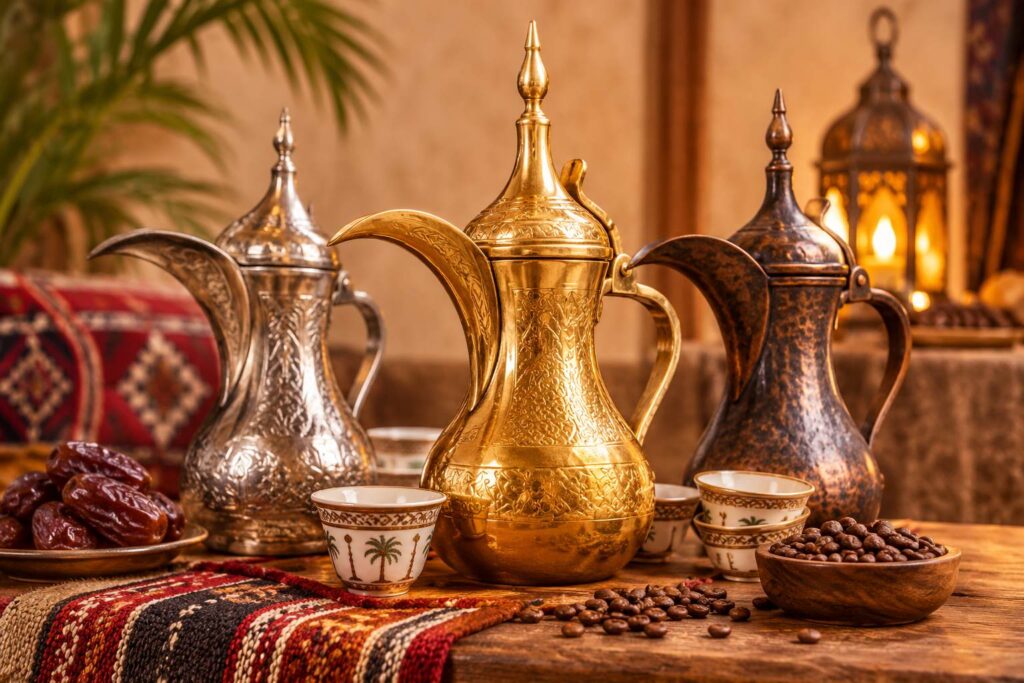
The Arabic Coffee Dallah: Types and How to Choose the Right One
Arabic coffee is much more than a traditional drink. It represents hospitality,
generosity, friendship, and a cultural heritage that has been passed down through
generations across the Arabian Peninsula and the wider Middle East. At the heart
of this tradition is the dallah, the distinctive Arabic coffee
pot recognized by its elegant curved spout, rounded body, decorative lid, and
beautifully shaped handle.
Whether displayed as a decorative object, used during family gatherings, or
presented as a meaningful gift, an Arabic coffee dallah combines practical
functionality with traditional craftsmanship. However, dallahs come in different
shapes, sizes, materials, and regional styles, so choosing the right one requires
understanding what makes each type special.
In this guide, we explore the history of the Arabic coffee dallah, its main types,
traditional materials, regional designs, and the most important factors to consider
before buying one.
What Is an Arabic Coffee Dallah?
A dallah is a traditional coffee pot used to prepare or serve
Arabic coffee, commonly known as Gahwa or Qahwa. It is one of
the most recognizable symbols of hospitality in Arab culture and has a long
history throughout the Arabian Peninsula.
Traditional dallahs typically feature a rounded or pear-shaped body, a narrow
neck, a lid with a decorative finial, and a long curved spout. The handle is
usually positioned on the opposite side of the spout, allowing the coffee to be
poured gracefully into small serving cups called finjan.
The design is not simply decorative. The curved spout helps control the flow of
coffee, while the handle makes pouring easier. The overall shape has evolved
over time, reflecting local craftsmanship, available materials, and regional
preferences.
It is worth noting that a dallah used for serving is not always the same vessel
used for brewing. In many traditional households, coffee is prepared in a larger
cooking pot and then transferred to a smaller serving dallah.
The Cultural Importance of the Dallah in Arab Hospitality
The Arabic coffee dallah represents far more than a kitchen utensil. It is
closely associated with welcoming guests, honoring visitors, and bringing
families and communities together.
In many Arab households, serving coffee is an important part of receiving guests.
The host traditionally pours small amounts of coffee into finjan cups and offers
them to visitors. The coffee is often served alongside dates, sweets, or other
traditional refreshments.
The way coffee is served can also communicate respect and generosity. The host
may continue offering coffee until the guest indicates that they have had enough.
Although customs differ between countries and communities, the dallah remains
an enduring symbol of welcome and social connection.
Because of this cultural significance, beautifully crafted dallahs are also
popular decorative objects, collectibles, and gifts for people who appreciate
traditional Middle Eastern art.
Different Types of Arabic Coffee Dallahs
Arabic coffee dallahs are available in many designs. Some differences are
associated with regional traditions, while others relate to materials,
craftsmanship, size, and intended use. Understanding these distinctions can
help you choose a pot that matches your needs and personal taste.
1. Traditional Gulf Dallah
The traditional Gulf dallah is among the most recognizable styles. It commonly
features a rounded body, a relatively narrow neck, a long curved spout, and a
distinctive lid. Brass, copper, and other metal finishes are frequently used
in traditional and decorative versions.
Depending on the maker and region, the body may feature engraved geometric
patterns, floral details, or polished surfaces. Some examples are simple and
functional, while others are highly ornate pieces of metalwork.
A Gulf-style dallah is a suitable choice for people who appreciate classic
Arabic design and want a recognizable centerpiece for a traditional coffee
setting.
2. Saudi Arabian Dallah
Saudi Arabian dallahs are associated with the country’s rich coffee-serving
traditions. Their designs vary across regions and individual workshops, but
many traditional examples feature a rounded body, an elegant curved spout,
and decorative metalwork.
Some Saudi-style dallahs are designed for everyday hospitality, while others
are produced as decorative or commemorative pieces. Their appearance can range
from understated polished metal to elaborate engraved designs.
When choosing a Saudi-style dallah, consider whether you want a practical
serving vessel or an ornamental piece inspired by traditional craftsmanship.
3. Emirati Dallah
Emirati coffee culture places great importance on hospitality and traditional
coffee service. Dallahs used in the United Arab Emirates may feature classic
Gulf-inspired silhouettes, decorative metal surfaces, and carefully shaped
handles and spouts.
Some designs emphasize traditional engraved details, while contemporary
versions use simpler forms and modern finishes. Both styles can complement
a traditional majlis or a modern home.
4. Omani Dallah
Omani metalwork has a distinctive place in the region’s traditional crafts.
Omani-inspired coffee pots can display decorative details and silhouettes
that reflect local artistic influences.
Their appearance varies considerably depending on the workshop, historical
inspiration, and intended use. Collectors interested in regional craftsmanship
may appreciate exploring Omani designs alongside other Gulf styles.
5. Yemeni and Other Regional Designs
Yemen has a long-standing coffee heritage, and traditional coffee vessels
reflect the country’s broader history of coffee cultivation, trade, and
hospitality. Yemeni-inspired pots and serving vessels can have distinctive
shapes and decorative characteristics.
Across the wider Middle East, coffee pots also reflect local preferences and
influences. For this reason, not every traditional metal coffee pot should
automatically be classified as a Gulf dallah. When buying a regional design,
check the seller’s description and the actual origin of the item.
Arabic Coffee Dallah Types by Material
The material is one of the most important factors when choosing a dallah.
It affects the appearance, weight, maintenance requirements, durability,
and suitability for preparing or serving hot coffee.
1. Brass Dallah
Brass is a popular material for traditional-style Arabic coffee pots. Its
warm golden appearance makes it particularly attractive for decorative
purposes, traditional interiors, and gift collections.
- Appearance: Warm golden color with a traditional look.
- Design: Often decorated with engraving and ornamental patterns.
- Best for: Decorative displays, collections, and traditional settings.
- Care: Requires appropriate cleaning to maintain its finish.
Not every brass dallah is suitable for direct heating or food contact. Before
using one for coffee preparation, verify that its interior lining, construction,
and manufacturer’s instructions make it food-safe and heat-safe.
2. Copper Dallah
Copper has been used in traditional cookware and metal vessels for centuries.
Copper dallahs are appreciated for their distinctive reddish-brown appearance
and the craftsmanship often associated with handmade examples.
- Appearance: Rich copper tones that can develop a natural patina.
- Design: Available in polished, hammered, and engraved finishes.
- Best for: Traditional interiors and decorative collections.
- Care: Needs suitable maintenance to protect the surface.
Copper can react with acidic foods and beverages. A copper vessel intended
for drinking or preparing coffee should have an appropriate food-safe lining
and be maintained according to the manufacturer’s instructions. Never assume
that an unlined decorative copper pot is suitable for brewing.
3. Stainless Steel Dallah
Stainless steel dallahs are a practical option for people who want a durable
and relatively easy-to-maintain coffee pot. They are commonly available in
polished, brushed, and gold-tone finishes.
- Appearance: Modern, polished, or traditional-inspired finishes.
- Durability: Generally resistant to rust and everyday wear when properly manufactured.
- Maintenance: Usually easier to clean than many decorative metals.
- Best for: Regular serving and practical household use.
If you plan to use a stainless steel dallah regularly, check its steel grade,
construction, capacity, handle comfort, and whether it is designed for direct
heating or serving only.
4. Silver and Silver-Plated Dallah
Silver and silver-plated dallahs are often associated with luxury, fine
craftsmanship, and special occasions. Their reflective surfaces and detailed
decoration make them attractive display pieces and memorable gifts.
- Appearance: Bright silver finish and elegant presentation.
- Design: May include intricate engraving and handcrafted details.
- Best for: Formal occasions, gifts, and collections.
- Care: May require polishing and careful storage.
Buyers should distinguish between solid silver, silver-plated metal, and
silver-colored finishes. These are different materials with different values
and maintenance requirements. Always check the product description for
accurate material information.
5. Ceramic and Decorative Dallahs
Ceramic and pottery-inspired coffee pots offer a different interpretation
of the traditional dallah. They may feature painted patterns, glazed surfaces,
or designs inspired by Middle Eastern decorative arts.
These pieces can be attractive additions to a home or collection. However,
decorative ceramic dallahs are not necessarily designed for direct heat or
hot liquids. Check whether the product is intended for food use, serving,
or decoration only.
Traditional Dallah vs. Modern Arabic Coffee Pot
Traditional and modern dallahs serve similar cultural purposes, but they
can differ significantly in construction, appearance, and convenience.
| Feature | Traditional Dallah | Modern Dallah |
|---|---|---|
| Design | Classic shapes and traditional ornamentation | Traditional-inspired or minimalist designs |
| Materials | Brass, copper, and other traditional metals | Often stainless steel and modern metal finishes |
| Craftsmanship | May feature hand engraving and artisan details | May use machine production or a combination of techniques |
| Maintenance | Depends on the metal and finish | Often designed for easier everyday cleaning |
| Typical purpose | Hospitality, cultural use, and decoration | Everyday serving, modern interiors, and convenience |
Neither style is automatically better. The right choice depends on whether
you value traditional appearance, practical daily use, handcrafted details,
or a combination of these qualities.
How to Choose the Right Arabic Coffee Dallah
Choosing the right dallah becomes easier when you first decide how you intend
to use it. A pot purchased for daily coffee service may have different
requirements from one intended for a decorative display or a special gift.
1. Decide How You Will Use It
Start by identifying the main purpose of your purchase:
- For everyday use: Look for a practical, food-safe pot that is easy to clean and comfortable to pour.
- For traditional coffee service: Choose a design that complements your finjan cups and serving accessories.
- For decoration: Focus on craftsmanship, finish, shape, and visual appeal.
- For collecting: Consider the maker, origin, age, materials, and authenticity of the piece.
- For gifting: Choose a design with attractive presentation and a clear description of its materials and origin.
2. Choose the Right Material
Material affects both appearance and practicality. Stainless steel is often
a convenient choice for regular use, while brass and copper offer a more
traditional look. Silver and silver-plated pieces can be suitable for formal
presentation, and ceramic designs may appeal to collectors and home decorators.
Always verify whether the pot is suitable for hot liquids, direct heating,
or serving only. This distinction is particularly important for decorative
metal and ceramic products.
3. Select an Appropriate Size and Capacity
Dallahs are available in different capacities. A smaller pot may be suitable
for individual use or serving a few guests, while a larger one is more practical
for family gatherings and hospitality.
Consider how many people you normally serve and remember that Arabic coffee
is traditionally poured in small portions. A large-looking pot does not
necessarily indicate its usable capacity, so check the stated volume before
purchasing.
4. Examine the Spout and Handle
The spout is one of the defining features of a dallah. A well-made spout
should pour smoothly and help prevent unwanted dripping. The handle should
feel comfortable and secure, especially when the pot contains hot coffee.
If possible, check the connection points, balance, and overall construction.
A beautifully decorated dallah should also be stable and practical if you
intend to use it.
5. Pay Attention to Craftsmanship
Decorative details can make a dallah especially appealing. Look closely at
engraved patterns, surface finishing, symmetry, lid fit, handle attachment,
and the quality of the spout.
Handmade pieces may have small variations that reflect the artisan’s work.
However, poor construction, sharp edges, loose components, or uneven joints
should not be mistaken for signs of traditional craftsmanship.
6. Consider the Interior and Food Safety
A dallah may look traditional on the outside but still have an interior
that is unsuitable for preparing or storing coffee. Check whether the inside
is made from a food-safe material and whether any lining is intact.
Avoid using decorative vessels for hot beverages unless the seller or
manufacturer confirms that they are designed for that purpose.
7. Compare Price, Origin, and Authenticity
The price of an Arabic coffee dallah can vary according to its material,
size, production method, age, condition, and level of craftsmanship.
A handmade brass or silver piece may cost more than a mass-produced
stainless steel model.
If regional origin or handmade production is important to you, look for
clear product information. A traditional appearance alone does not prove
that a pot was made in a particular country or by a particular artisan.
How Is Arabic Coffee Traditionally Served?
Arabic coffee is commonly prepared using lightly roasted coffee beans,
although roasting preferences vary between regions and households.
Cardamom is one of the most familiar additions, while saffron, cloves,
and other spices may be used according to local taste.
Once prepared, the coffee is often served in small, handleless cups called
finjan. The host pours a modest amount into each cup rather than
filling it completely. This allows guests to enjoy several small servings
during a gathering.
Dates are a traditional accompaniment and provide a natural sweetness that
balances the aromatic flavor of the coffee. Other sweets and refreshments
may also be served.
Serving customs differ across the region, but the experience generally
emphasizes hospitality, conversation, and respect for guests.
How to Clean and Maintain an Arabic Coffee Dallah
Proper care helps preserve the appearance and usability of your dallah.
The correct cleaning method depends on its material, interior lining,
and manufacturer’s instructions.
- Stainless steel: Clean with warm water and mild dish soap, then dry thoroughly.
- Brass: Use a suitable metal-care product when necessary and avoid abrasive cleaning that may damage decorative details.
- Copper: Follow the manufacturer’s cleaning instructions, especially if the vessel has a food-safe interior lining.
- Silver: Use an appropriate silver-cleaning method and store the piece in a dry place.
- Ceramic: Check whether the glaze and construction are suitable for washing and hot liquids.
Do not use harsh chemicals or abrasive tools on delicate engraved surfaces.
If your dallah is an antique or valuable collectible, consider asking a
specialist before polishing it. Excessive cleaning may remove its original
finish or patina.
After use, empty any remaining coffee, clean the interior as recommended,
and allow the pot to dry completely before storing it.
Arabic Coffee Dallah as a Decorative Piece and Gift
An Arabic coffee dallah can be an attractive addition to a living room,
dining area, office, or traditional majlis. Its distinctive silhouette
and decorative metalwork make it a recognizable symbol of Middle Eastern
hospitality.
A polished brass or copper-style dallah can complement warm interior colors,
wooden furniture, and traditional textiles. Silver-tone designs may suit
more formal settings, while modern stainless steel models can work well
in contemporary homes.
Dallahs are also meaningful gifts for weddings, housewarmings, cultural
celebrations, and special occasions. Pairing a coffee pot with matching
finjan cups, a serving tray, or a set of traditional accessories can create
a thoughtful gift.
Common Mistakes to Avoid When Buying a Dallah
Before making a purchase, keep these common mistakes in mind:
- Buying a decorative dallah without checking whether it is safe for serving hot coffee.
- Assuming that every gold-colored pot is made from solid brass.
- Confusing silver-plated products with solid silver.
- Choosing a pot based only on its appearance without checking its capacity.
- Ignoring the quality of the handle, lid, and spout.
- Assuming that a regional design guarantees that the product was manufactured in that region.
- Overlooking cleaning and maintenance requirements.
Reading the product specifications carefully and asking the seller about
materials, origin, and intended use can help you make a more confident decision.
Frequently Asked Questions About Arabic Coffee Dallahs
What is the difference between a dallah and a regular coffee pot?
A dallah is a traditional Arabic coffee pot with a distinctive shape,
usually featuring a rounded body, a long curved spout, a handle, and a
decorative lid. Its design is closely connected to Arabic coffee-serving
traditions and hospitality.
Which material is best for an Arabic coffee dallah?
The best material depends on your needs. Stainless steel is often practical
for everyday use, brass and copper offer traditional aesthetics, and silver
or silver-plated designs are popular for decorative and formal settings.
Always verify food safety and heating suitability.
Can I use a brass dallah to boil coffee?
Not every brass dallah is designed for direct heating. Some are decorative
or intended only for serving. Use a brass pot for brewing only when its
manufacturer confirms that the material, interior lining, and construction
are suitable for heating and food contact.
What size dallah should I buy?
Choose the capacity according to the number of people you usually serve.
A smaller dallah can be suitable for personal use or a small household,
while a larger one may be more convenient for gatherings. Always check
the actual capacity rather than relying on appearance alone.
Is an Arabic coffee dallah a good gift?
Yes. A well-crafted dallah can be a meaningful gift because it represents
hospitality and cultural heritage. Decorative brass, copper, and silver-tone
models are particularly popular for special occasions.
How do I know if a dallah is handmade?
Look for clear information from the seller about the maker and production
process. Engraving, finishing, and small variations may provide clues, but
appearance alone cannot prove that a product is handmade. Ask for details
about its origin and craftsmanship.
Can I use a decorative dallah as a serving pot?
Only if it is specifically made from food-safe materials and is suitable
for hot liquids. Some decorative dallahs are intended exclusively for
display and should not be used for serving beverages.
Final Thoughts: Finding the Perfect Arabic Coffee Dallah
The Arabic coffee dallah is a beautiful expression of hospitality,
craftsmanship, and cultural heritage. From traditional brass and copper
designs to practical stainless steel models and elegant silver-plated
pieces, there is a wide variety of styles to explore.
The right choice depends on how you plan to use it, the material you prefer,
the size you need, and the design that best reflects your taste. If you want
a practical coffee pot, prioritize food safety, comfortable handling,
durability, and ease of cleaning. If you are looking for a decorative
centerpiece or a special gift, pay closer attention to craftsmanship,
finish, and regional design.
Whether used to welcome guests or displayed as a piece of traditional
Middle Eastern art, a thoughtfully chosen dallah brings a distinctive
touch of Arabic coffee culture into any home.


