


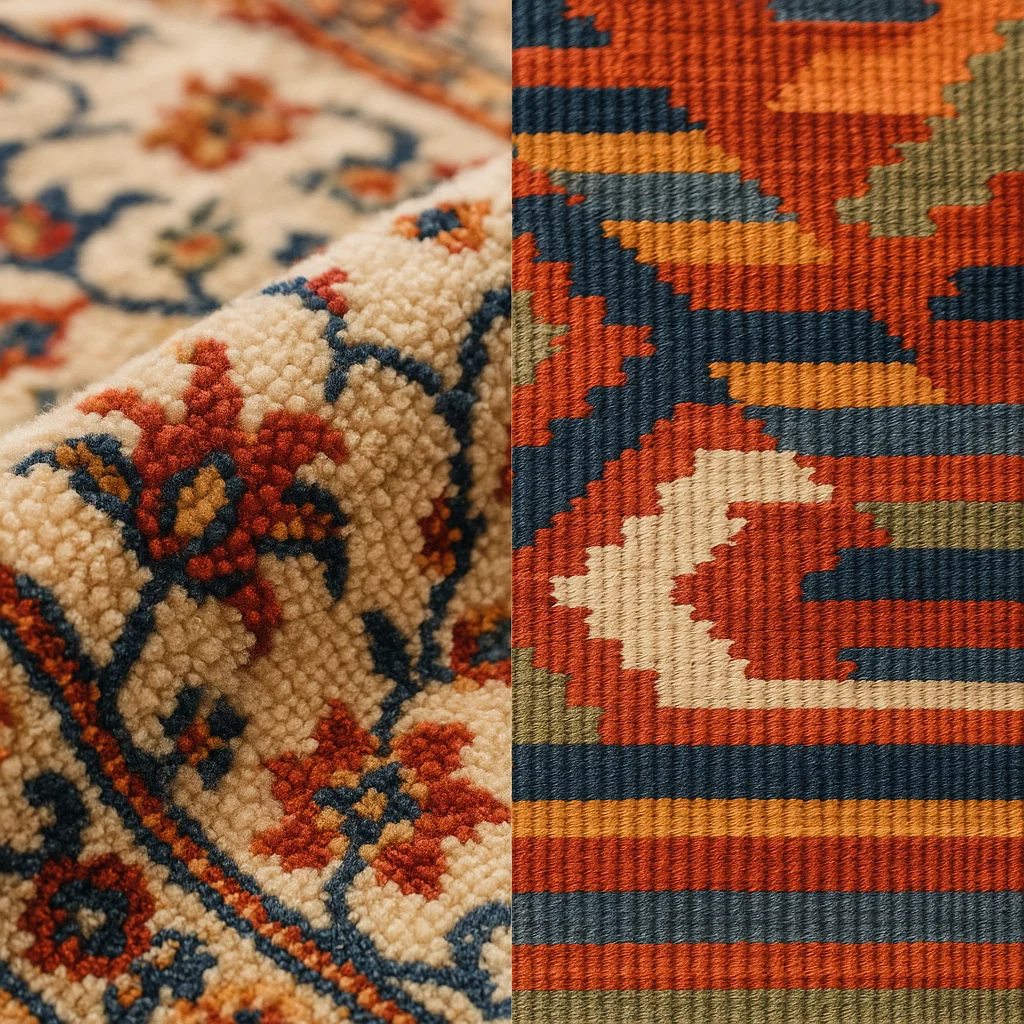
Persian carpets and rugs are among the most valuable examples of traditional art and craftsmanship in the world, representing thousands of years of history, creativity, and expertise passed down through generations of Iranian weavers. These hand-woven masterpieces are not merely floor coverings; they are expressions of cultural identity, artistic heritage, and the unique traditions of different regions of Iran. Many buyers searching for an authentic Persian carpet often have questions about the difference between a carpet and a rug, how to identify a genuine hand-woven piece, the importance of materials, knot density, patterns, and weaving origins. Understanding these characteristics allows you to make a more informed choice and select a Persian textile that combines beauty, authenticity, artistic value, and long-lasting quality.
Carpet or Rug: What Is the Difference?
The terms “carpet” and “rug” are often used interchangeably, but there are some traditional differences between them.
Carpet generally refers to a larger textile floor covering designed to cover an entire room or a significant part of a floor. In Persian culture, the term carpet is often associated with high-quality handmade pieces, especially Persian carpets known for their detailed designs, fine weaving, and exceptional craftsmanship.
Rug usually refers to a smaller decorative floor covering that does not cover the entire floor. Rugs are often used as artistic elements in interior spaces, adding warmth, color, and character to homes.
However, in the world of Persian weaving, size is not the most important factor. The quality of craftsmanship, type of materials, weaving technique, authenticity of design, and artistic value are often more significant than the dimensions of the piece.
The Rich History of Persian Hand-Woven Carpets
Persian carpet weaving has a history that stretches back thousands of years. One of the oldest known examples is the Pazyryk Carpet, discovered in Siberia and believed to have been created around the 5th century BC. This remarkable artifact demonstrates the advanced weaving skills and artistic traditions that existed in ancient Persia.
Throughout different historical periods, especially during the Safavid era, Persian carpet weaving reached extraordinary levels of refinement. Royal workshops created magnificent carpets featuring intricate floral patterns, hunting scenes, medallions, and symbolic designs.
Today, Persian carpets continue to be recognized worldwide as symbols of artistic excellence, cultural heritage, and traditional craftsmanship.
How to Identify an Authentic Persian Hand-Woven Carpet
Identifying a genuine Persian hand-woven carpet requires attention to several important characteristics:
1. Handmade Knotting
Authentic Persian carpets are created by skilled artisans who tie every knot by hand. Unlike machine-made carpets, handmade pieces often contain slight variations that reflect the unique craftsmanship and individuality of the weaver.
2. Natural Materials
Traditional Persian carpets are usually made from high-quality natural fibers such as wool, silk, and cotton. Silk carpets are especially valued for their luxurious texture, shine, and ability to display extremely detailed patterns.
3. Unique Designs and Patterns
Persian carpets are famous for their wide variety of designs, including floral motifs, central medallions, gardens, geometric patterns, and regional symbols. Each weaving region of Iran has developed its own distinctive artistic style.
4. Knot Density
The number of knots per square meter is an important indicator of quality. Higher knot density usually represents greater detail, precision, and craftsmanship.
5. Regional Origin
Authentic Persian carpets are often identified by their place of origin. Famous weaving centers such as Tabriz, Isfahan, Kashan, Nain, Qom, Kerman, and Shiraz are each known for their unique styles and artistic characteristics.
Popular Types of Persian Carpets and Rugs
Persian Tabriz Carpets
Tabriz carpets are famous for their precise weaving, detailed patterns, and sophisticated designs. They often feature elegant medallions, floral decorations, and complex compositions.
Isfahan Carpets
Isfahan carpets are considered among the finest Persian carpets. They are admired for their delicate floral designs, balanced compositions, and exceptional artistic quality.
Kashan Carpets
Kashan carpets are known for their classic Persian patterns, rich colors, and traditional medallion designs.
Gabbeh Rugs
Gabbeh rugs are recognized for their simple designs, thick wool texture, and connection to the lifestyle of Persian nomadic communities. Their patterns often represent nature, animals, and everyday experiences.
Kilim Rugs
Persian kilims are flat-woven textiles without a pile. They are lightweight, colorful, and feature geometric designs created through traditional weaving methods.
Choosing the Right Persian Carpet or Rug
When selecting a Persian carpet or rug, several factors should be considered:
Purpose and Location
Consider where the piece will be placed. A large formal carpet may be suitable for a living room, while a smaller rug may work better in bedrooms, hallways, or decorative areas.
Material
Wool carpets are durable and practical, while silk carpets provide luxury, softness, and exceptional detail. Cotton is often used as a strong foundation material.
Design and Colors
Choose patterns and colors that complement your interior style. Persian carpets are available in traditional, classic, and contemporary designs.
Authenticity and Certification
When purchasing a valuable Persian carpet, choose trusted sources that provide information about origin, materials, craftsmanship, and authenticity.
Why Persian Carpets Are More Than Floor Coverings
A Persian carpet is not simply a decorative object; it is a piece of cultural history. Every handmade carpet carries the story of its weaver, the traditions of its region, and centuries of artistic knowledge.
For collectors, Persian carpets are often considered valuable investments because their rarity, craftsmanship, and cultural significance can increase their value over time.
Final Thoughts
Whether you call it a carpet or a rug, an authentic Persian hand-woven piece represents beauty, tradition, and exceptional craftsmanship. Learning the differences, understanding quality indicators, and choosing the right style will help you appreciate these timeless treasures.
A Persian carpet is much more than a textile—it is a masterpiece that connects generations, preserves history, and brings the elegance of Persian art into homes around the world.