


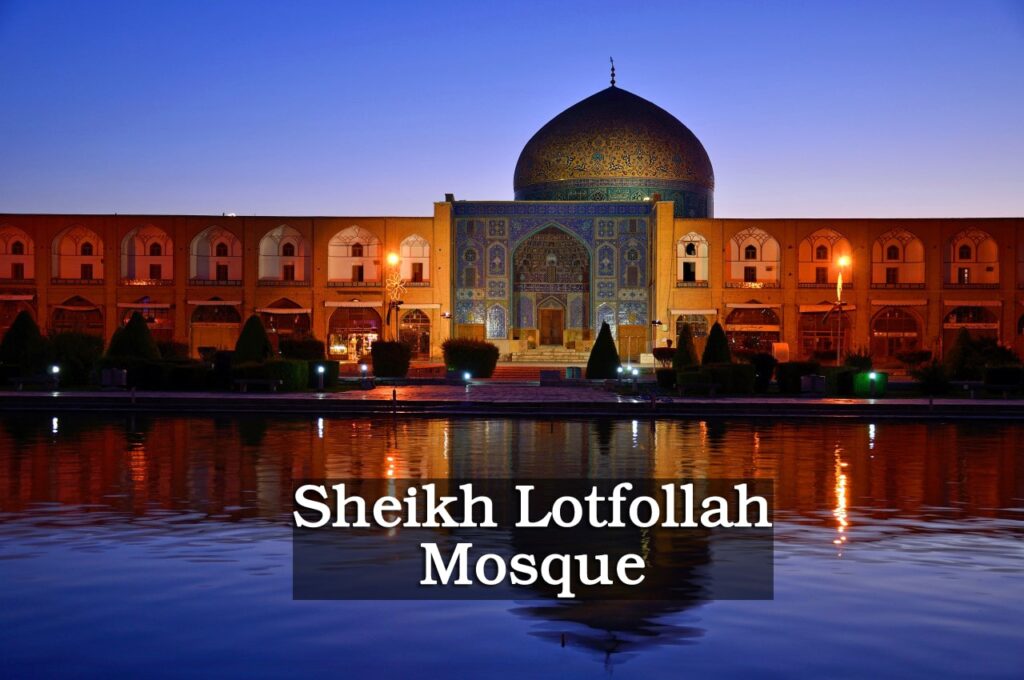
The Sheikh Lotfollah Mosque stands as one of the most extraordinary examples of Persian Islamic architecture and one of the greatest artistic achievements of the Safavid era. Located in the magnificent Naqsh-e Jahan Square in Isfahan, Iran, this masterpiece represents the perfect harmony between architecture, geometry, spirituality, and artistic creativity. Built during the golden age of the Safavid dynasty, the mosque reflects the elegance, sophistication, and cultural brilliance of a period when Isfahan became one of the most important centers of art and civilization in the world.
The construction of Sheikh Lotfollah Mosque began in 1603 under the order of Shah Abbas I, one of the most influential rulers of the Safavid dynasty, and was completed in 1619. Unlike many traditional mosques of the Islamic world, this mosque was not designed as a public place of worship. Instead, it was created as a private royal sanctuary, primarily used by the royal family and court members. Its unique purpose influenced every aspect of its design, resulting in a building that combines intimacy, beauty, and spiritual depth.
The mosque was named after Sheikh Lotfollah, a respected Lebanese scholar and religious figure who was invited to Isfahan by Shah Abbas I. The ruler built the mosque in his honor and provided a special place for religious activities and private ceremonies. The connection between the mosque and the Safavid court highlights the importance of religion, knowledge, and artistic expression during this remarkable period of Persian history.
One of the most fascinating features of Sheikh Lotfollah Mosque is its unusual architectural design. Unlike traditional Persian mosques, it does not have minarets or a large courtyard. The absence of these common elements creates a more private and harmonious atmosphere. The architect carefully designed the structure to adapt to the surrounding environment while maintaining a sense of mystery and elegance.
The entrance portal of the mosque is decorated with some of the finest examples of Safavid tilework. The intricate patterns, delicate floral designs, and deep blue and turquoise colors create a breathtaking visual experience. The combination of calligraphy, geometric shapes, and natural motifs demonstrates the exceptional skill of Persian artists and craftsmen.
Inside the mosque, visitors encounter one of the most beautiful domes in the world. The interior dome is decorated with delicate patterns that change in appearance as light enters the building. The golden and cream-colored tiles create a warm and spiritual atmosphere, while the central design resembles a peacock’s tail, symbolizing beauty and divine perfection. The movement of sunlight throughout the day transforms the interior space, creating a constantly changing display of light and color.
The dome of Sheikh Lotfollah Mosque is also an architectural masterpiece because of its precise engineering. The transition from the square prayer hall to the circular dome above was achieved through complex geometric techniques. This innovation demonstrates the advanced knowledge of Persian architects in mathematics, structure, and visual harmony.
The mosque’s famous underground passage, which connected it to the Ali Qapu Palace across Naqsh-e Jahan Square, was designed to allow royal women to move safely and privately between the palace and the mosque. This feature reveals the careful attention given to privacy and royal traditions during the Safavid period.
Sheikh Lotfollah Mosque is not only an architectural achievement but also a symbol of Persian artistic philosophy. Every element, from the smallest tile pattern to the overall structure, was created with deep attention to balance, proportion, and meaning. The mosque represents the Persian belief that architecture can be a bridge between the earthly world and the spiritual realm.
The colors used throughout the mosque carry symbolic and aesthetic importance. Persian blue, turquoise, cream, and gold combine to create a visual language associated with harmony, spirituality, and beauty. These colors, together with the intricate decorations, demonstrate the Safavid mastery of tilework and decorative arts.
Today, Sheikh Lotfollah Mosque remains one of Iran’s most treasured historical monuments and a masterpiece recognized around the world. It continues to attract visitors, architects, historians, and art lovers who admire its unique beauty and extraordinary craftsmanship. Standing in the heart of Isfahan’s Naqsh-e Jahan Square, the mosque serves as a timeless reminder of the artistic achievements and cultural greatness of Safavid Persia.
Sheikh Lotfollah Mosque is more than a historical building; it is a celebration of light, color, geometry, and spirituality. Through its elegant design and breathtaking details, it preserves the memory of a golden age when Persian architecture reached one of its highest points of creativity and perfection.