


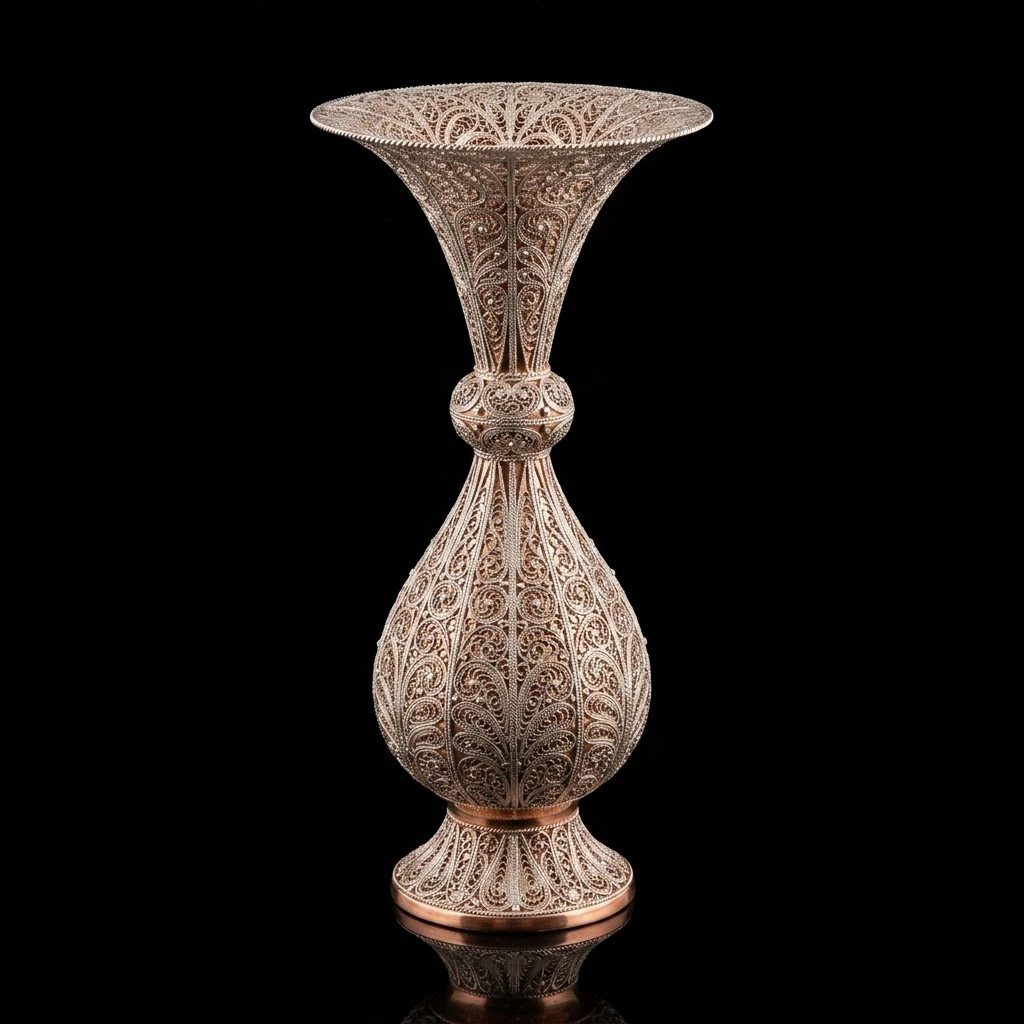
Persian Filigree, known in Iran as Malileh Kari (ملیله کاری), is one of the oldest and most sophisticated forms of traditional Iranian metalwork. Created by meticulously twisting and soldering fine silver or gold wires into elegant lace-like patterns, this remarkable handicraft represents centuries of artistic excellence, technical precision, and cultural identity. Recognized as one of Iran’s most valuable handicrafts, Persian filigree continues to preserve the country’s rich artistic heritage while showcasing the extraordinary craftsmanship of Iranian master artisans.
A History Spanning More Than Two Millennia
The origins of Persian filigree can be traced back to ancient Persia. Archaeological discoveries from historical sites such as Susa and Hamedan indicate that delicate metalworking techniques similar to modern filigree were practiced during the Achaemenid and Sassanian periods. Although many early masterpieces were lost because precious metals were melted down or reused over the centuries, historical records and surviving artifacts confirm that this refined craft has been part of Iranian civilization for well over two thousand years. During the Safavid era (1501–1736), Persian decorative arts flourished, and filigree became increasingly popular among royal courts, wealthy merchants, and religious institutions. Master craftsmen produced luxurious trays, jewelry, caskets, candle holders, mirrors, Quran stands, tea sets, and ceremonial objects that demonstrated both artistic beauty and exceptional technical skill.
Zanjan: The Heart of Persian Filigree
Today, the city of Zanjan is internationally recognized as the center of Persian filigree craftsmanship. For generations, local artisans have passed their knowledge from master to apprentice, preserving techniques that require years of dedication to perfect. Zanjan has earned international recognition as the World City of Filigree, reflecting its long-standing reputation for producing some of the world’s finest silver filigree works. The city remains home to highly skilled craftsmen who continue to create intricate handmade pieces using traditional methods that have changed very little over centuries. Alongside Zanjan, cities such as Isfahan and Tehran have also become important centers for the production and promotion of Persian filigree.
The Art Behind Every Piece
Creating a single filigree artwork is an incredibly delicate process that demands patience, precision, and artistic vision. First, pure silver is melted and drawn into extremely thin wires. These wires are then twisted, curled, and shaped into intricate motifs inspired by Persian art, including:
– Floral patterns
– Boteh (Paisley)
– Arabesque designs
– Geometric ornaments
– Traditional Persian vines and leaves
Each tiny element is carefully arranged by hand before being soldered together. After polishing and finishing, the result is a lightweight yet durable artwork that resembles delicate silver lace. Unlike mass-produced metal products, every handcrafted filigree piece is unique, reflecting the individual creativity and expertise of its artisan.
A Symbol of Persian Culture
Persian filigree is far more than decorative metalwork—it is an expression of Iran’s artistic philosophy. Traditional Persian aesthetics emphasize harmony, balance, symmetry, and the beauty found in intricate detail. These principles are clearly visible in filigree artworks, where thousands of carefully arranged silver threads create elegant compositions that celebrate nature, geometry, and spirituality. For centuries, filigree objects have been used during important family celebrations, religious ceremonies, weddings, and cultural events, making them both artistic treasures and symbols of Iranian identity.
Modern Growth and International Recognition
In recent decades, Persian filigree has gained increasing international appreciation among collectors, museums, interior designers, and lovers of handmade luxury crafts. Contemporary Iranian artisans successfully combine traditional techniques with modern design, producing elegant jewelry, home décor, luxury gifts, and collectible artworks for global markets while preserving authentic craftsmanship. The growing interest in sustainable handmade products has further increased worldwide demand for authentic Persian filigree, allowing this ancient art to thrive in the modern era.
Why Persian Filigree Remains Timeless
Persian filigree represents a perfect balance between engineering precision and artistic imagination. Every handcrafted piece reflects countless hours of careful work, generations of accumulated knowledge, and a deep respect for Iranian cultural traditions. Whether displayed as fine home décor, worn as elegant jewelry, or preserved as a collectible artwork, Malileh Kari continues to embody the creativity, patience, and craftsmanship that have distinguished Persian art for centuries. Today, Persian filigree stands as one of Iran’s most treasured handicrafts, connecting the country’s ancient artistic legacy with contemporary appreciation for authentic handmade excellence.