


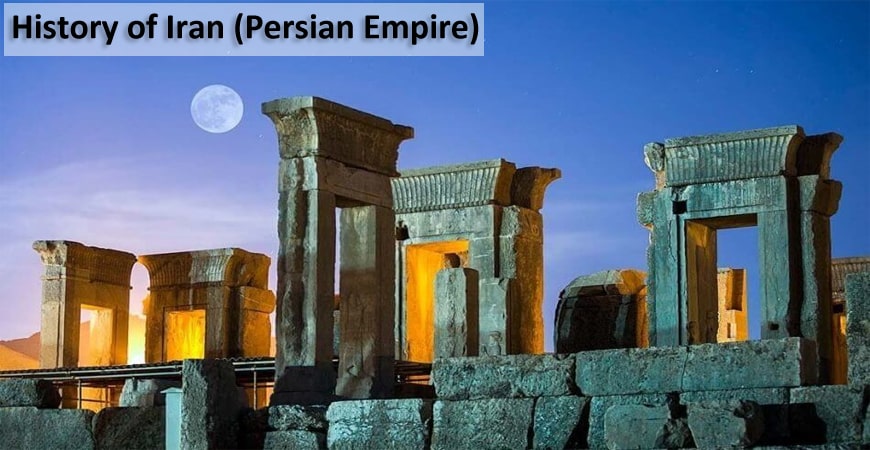
The history of Iran is one of the oldest and most fascinating stories of human civilization. For thousands of years, the Iranian plateau has been a center of culture, innovation, art, science, and political power. From the rise of ancient kingdoms to the creation of magnificent empires, Iran has played a significant role in shaping the history of the world. Known historically as Persia, this land has left an enduring legacy that continues to influence global culture and civilization.
The origins of Iranian civilization date back thousands of years, with ancient communities developing advanced agricultural, artistic, and social systems on the Iranian plateau. Early civilizations such as Elam contributed greatly to the cultural foundations of the region. Located in southwestern Iran, Elam was one of the oldest civilizations of the ancient Near East, known for its cities, writing systems, and complex political structures.
One of the greatest chapters in Iranian history began with the rise of the Achaemenid Empire in the sixth century BC. Founded by Cyrus the Great, the Achaemenid Empire became one of the largest and most powerful empires the ancient world had ever seen. Cyrus established a model of governance based on respect for different cultures, religious tolerance, and organized administration. His policies helped create a vast empire that stretched from Central Asia and the Indus Valley to Egypt and the Mediterranean.
Under rulers such as Darius the Great and Xerxes, the Achaemenid Empire reached new heights of power and organization. Darius developed an advanced administrative system, built the Royal Road, introduced economic reforms, and began the construction of Persepolis, one of the greatest architectural achievements of ancient Persia. The empire’s ability to manage diverse peoples and cultures became a model for future civilizations.
After the fall of the Achaemenid Empire following the conquest of Alexander the Great, Iran entered a new era under the Seleucid and Parthian periods. The Parthian Empire, founded in the third century BC, became a major power that successfully resisted Roman expansion and controlled important trade routes between East and West. The Parthians played a crucial role in connecting civilizations through commerce and cultural exchange.
The Sasanian Empire, which rose in the third century AD, represented another golden age of Persian civilization. The Sasanians restored centralized Persian authority and created a powerful state known for its achievements in art, architecture, science, and philosophy. Cities such as Ctesiphon became centers of knowledge and political influence. During this period, Zoroastrianism became the official religion of the empire, and Persian scholars contributed significantly to intellectual developments.
The arrival of Islam in the seventh century brought profound changes to Iran. Although the Sasanian Empire collapsed, Iranian culture, language, and traditions continued to survive and influence the Islamic world. Persian scholars, poets, scientists, and philosophers made remarkable contributions during the Islamic Golden Age. Figures such as Avicenna, Al-Khwarizmi, and Ferdowsi played essential roles in preserving and expanding knowledge.
The medieval period witnessed the rise of several Iranian dynasties, including the Samanids, Seljuks, and Timurids, who supported Persian literature, architecture, and intellectual achievements. Persian became one of the major cultural languages of the Islamic world, spreading from Anatolia to Central Asia and the Indian subcontinent.
The Safavid Empire, established in the early sixteenth century, marked another turning point in Iranian history. The Safavids unified Iran after centuries of political fragmentation and established Twelver Shia Islam as the state religion. Under Shah Abbas the Great, Iran experienced remarkable cultural and economic growth. The city of Isfahan became a symbol of Persian artistic excellence, with magnificent architecture, grand mosques, and the famous Naqsh-e Jahan Square.
In the modern era, Iran experienced significant political and social transformations. The Qajar period brought increasing contact with European powers, while the twentieth century introduced major changes, including the Constitutional Revolution and the establishment of modern political institutions. Iran’s rich historical identity continued to shape its society and international role.
Throughout its long history, Iran has been a bridge between civilizations. Its contributions to literature, architecture, mathematics, medicine, astronomy, and philosophy have influenced cultures across the world. Persian poetry, represented by figures such as Rumi, Hafez, Saadi, and Ferdowsi, remains one of the greatest literary traditions in human history.
Today, Iran stands as a country with a deep historical heritage and a cultural identity shaped by thousands of years of civilization. The legacy of Persia lives on through its ancient monuments, artistic traditions, language, and contributions to humanity. From the great empires of antiquity to the achievements of modern times, the history of Iran represents a remarkable journey of resilience, creativity, and enduring influence.
Iran’s story is not only the story of a nation; it is the story of a civilization that has continuously reinvented itself while preserving its connection to the past. The eternal legacy of Persia remains a testament to the power of culture, knowledge, and human creativity across the ages.